


Not All
Carbon Is
Created Equal
Everyone says their bike is carbon. But carbon is just the beginning of the conversation — how it's made, how it's laid, and how it's cured is what separates a frame that flies from one that fails. Here's what actually goes into the stuff you're riding.

Carbon fibre revolutionised cycling. Before it, performance came down to geometry and the skill of a welder. Now the material itself is tunable — stiff where you need it, compliant where you don't. But the gap between a well-made carbon product and a poorly made one is enormous, and it's almost invisible to the eye.
This is your guide to understanding what's actually happening inside your frame, your wheels, and your bars — and how to tell the difference between genuine quality and a good-looking shell.
the layup.
How Carbon
Gets Made
Raw carbon fibre starts life as a precursor material — almost always polyacrylonitrile (PAN). It's spun into thin fibres, then put through a carefully controlled process of stabilisation, carbonisation, and surface treatment at extremely high temperatures. What emerges are long, thin strands of nearly pure carbon atoms bonded together in a crystalline structure. On their own, these fibres are incredibly strong in tension but do nothing without a matrix — that's where resin comes in. Combined, the fibre and resin become a composite: the fibre carries the load, the resin binds everything together and transfers stress between fibres.
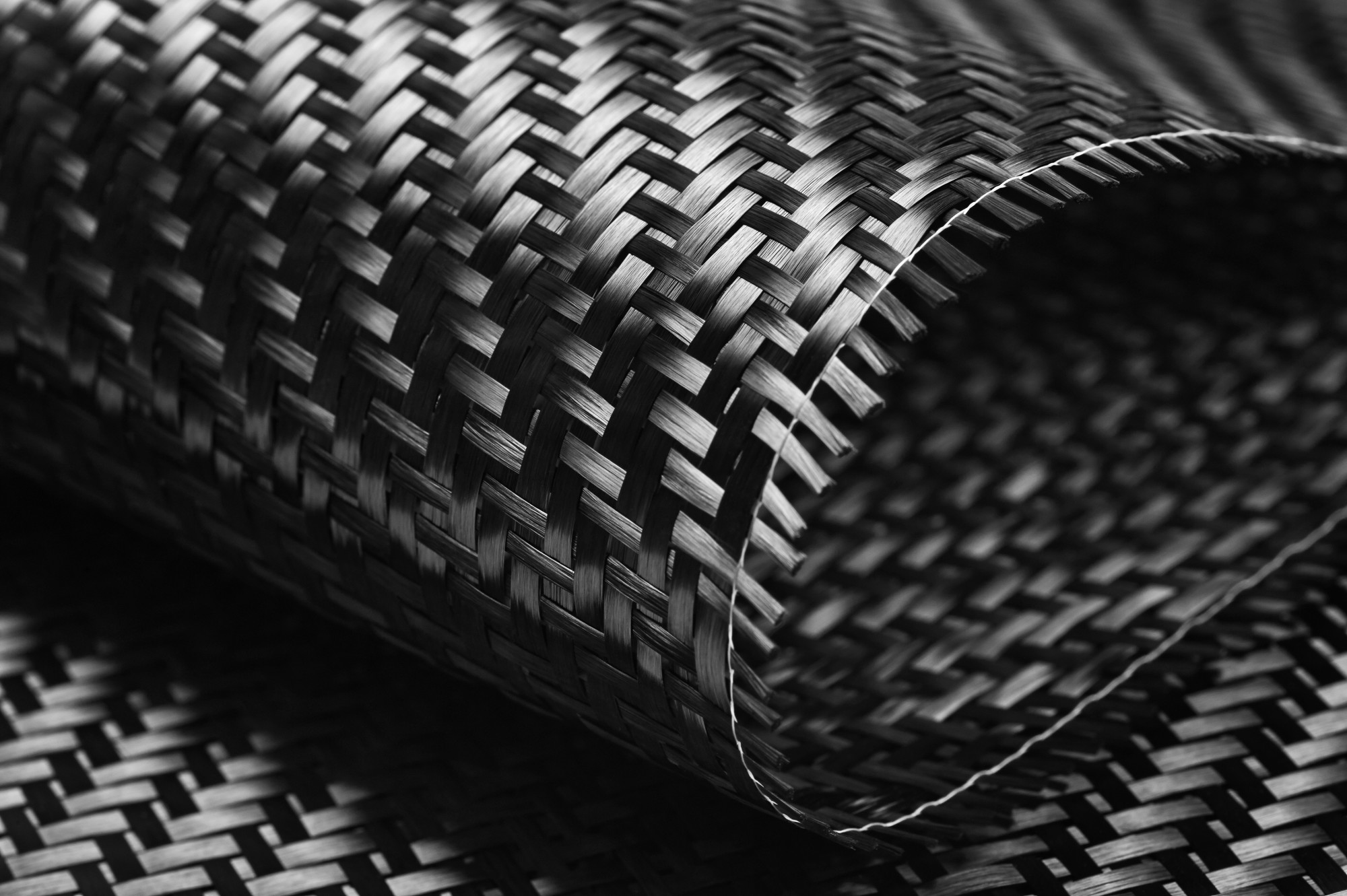
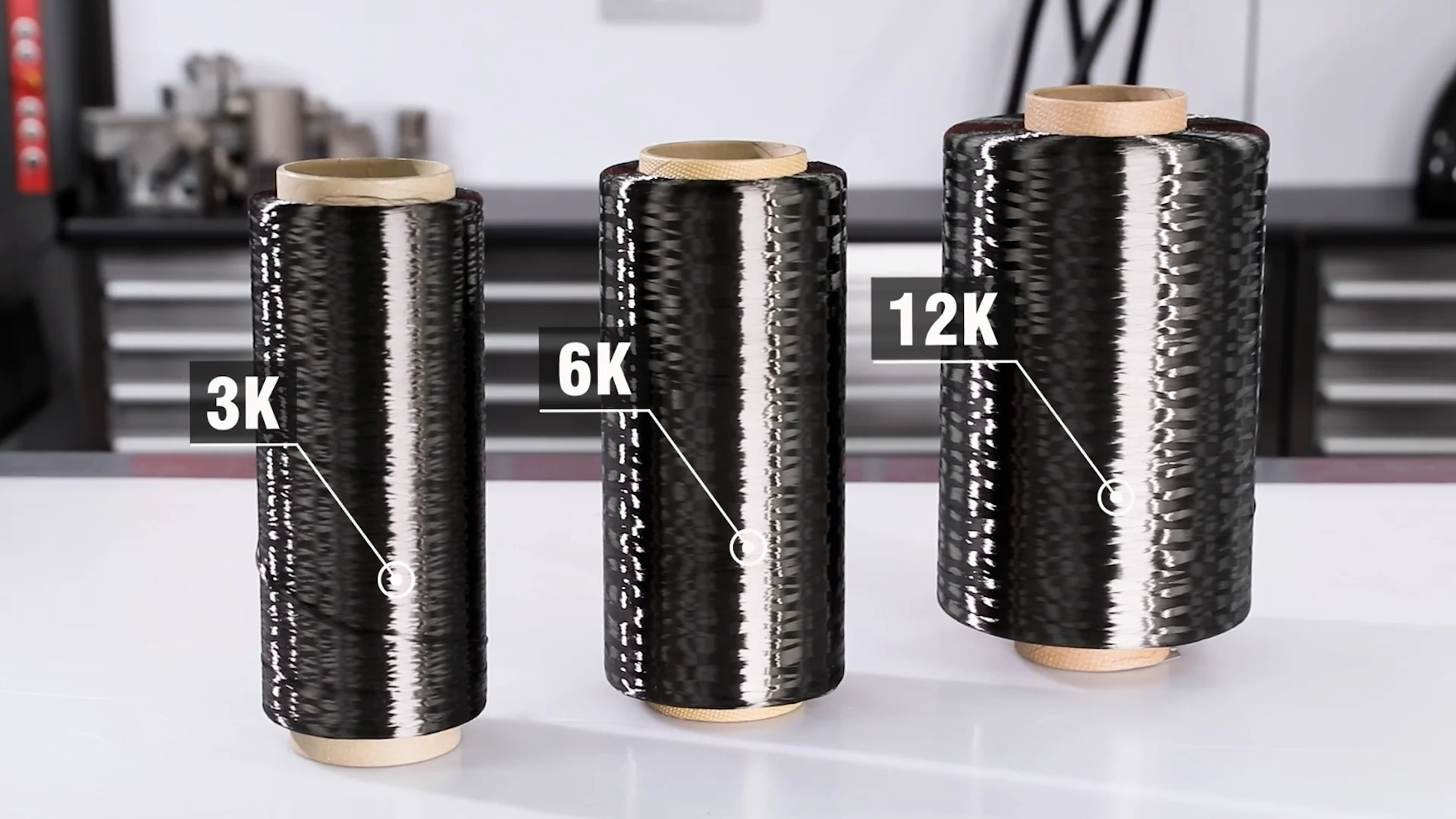
The fibres are bundled into "tows" and counted by the thousand. You'll see designations like 3K, 12K, or 24K — that's 3,000, 12,000, or 24,000 fibres per bundle. Smaller tow sizes (like 3K) create a tighter, finer weave pattern, typically used on visible surfaces. Higher K counts are more commonly found in structural layers where aesthetics matter less than strength-to-weight.
Most cycling components use what's called "prepreg" — carbon fibre that's been pre-impregnated with resin and kept refrigerated to stop it from curing prematurely. The builder cuts this sheet material into shapes, stacks (or "lays up") those shapes in a mould, and applies heat and pressure to cure the whole assembly. The fibre orientation in each layer, and the number of layers, is the "recipe" — and it's where most of the engineering actually lives.
"The carbon is the ingredient. The layup is the recipe. The cure is the oven. A bad baker ruins good flour."
— Carbon frame engineering principleThe Four
Methods
There are several distinct ways to manufacture carbon bike components, and each has a real effect on how the finished product performs, how much it costs, and how consistent the quality is batch to batch. Understanding these techniques helps you read between the lines of a brand's marketing.
Bladder Moulding
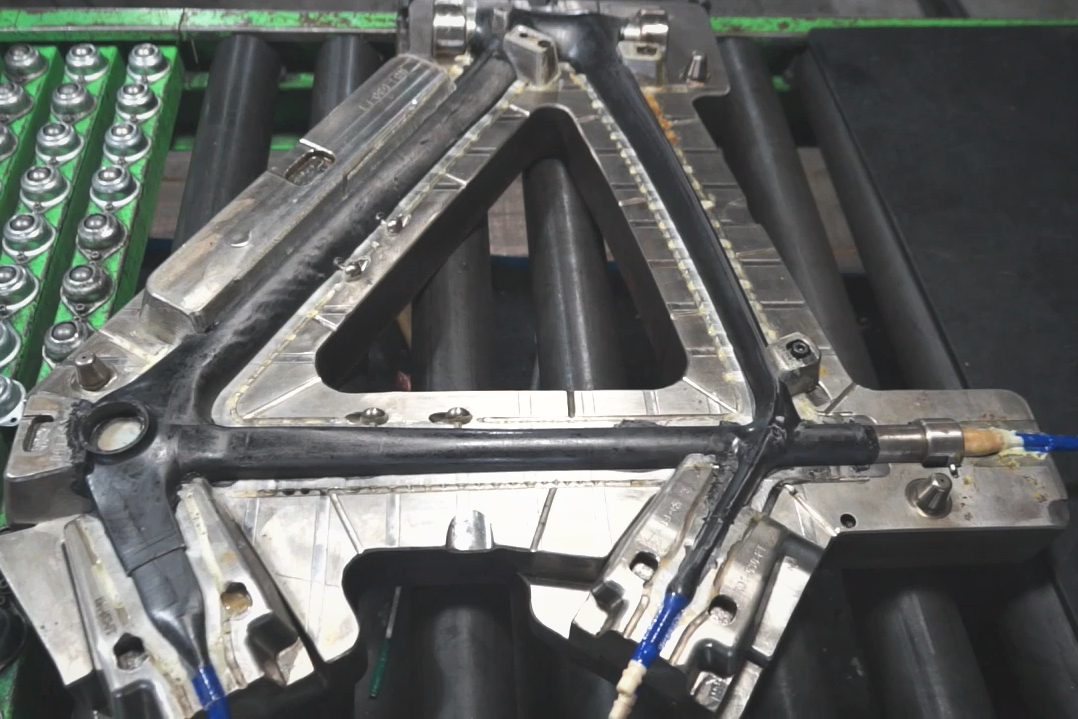
The most widely used method in production cycling frames. Prepreg carbon is placed into a rigid mould, and an inflatable rubber bladder is inserted inside. When heat is applied, the bladder inflates, pressing the carbon outward against the mould walls under even pressure. The result is a hollow tube with consistent wall thickness. It's fast, scalable, and cost-effective — which is why most frames from large factories use this process. At its best it produces excellent results. At its worst, when the bladder fit is imprecise or the layup is rushed, it can leave voids or uneven compaction.
Foam Core Moulding
A variation where a rigid foam core — rather than an inflatable bladder — provides internal pressure during curing. Heat causes the foam to expand, pressing the carbon outward. The foam stays inside the finished frame permanently, which adds a small weight penalty but eliminates voids that might form if a bladder slips. Foam core is considered more controllable in complex geometry situations, particularly at junction points like the bottom bracket shell where several tubes meet. It's often used by brands that want predictable results in high-stress areas.
Resin Transfer Moulding (RTM)
RTM is the method used in high-end automotive and aerospace — and only a handful of bike manufacturers have adopted it. Dry carbon fibre is placed into a closed mould, and resin is injected under pressure to saturate the fibre. Because the resin injection is controlled mechanically, the fibre-to-resin ratio is extremely consistent — something far harder to achieve in hand layup. TIME Bicycles is the most prominent cycling brand using RTM. The finished tube has outstanding consistency, fewer voids, and very predictable mechanical properties. The tooling costs are high, which is why it hasn't spread more widely.
Roll Wrapping & Filament Winding
Roll wrapping is a more artisanal technique, often used for round tubes like handlebars, stems, and seatposts. Carbon sheets are literally rolled around a mandrel, building up layers like a Swiss roll. Filament winding uses continuous tows of fibre wound around a rotating form under precise tension. Both methods allow extremely fine control over fibre angle and ply count, making them ideal for tuning stiffness in specific directions. They are slower and more labour-intensive than moulding, which limits their use in high-volume frame production.

High-end manufacturers perform non-destructive testing — including ultrasound and XRAYs — to detect internal voids before a frame ever ships.
Modulus,
Grades & the
Marketing Fog

What "High Modulus" Actually Means
You'll see terms like "high modulus," "ultra-high modulus," or "T700," "T800," "T1000" used in marketing. Modulus refers to stiffness — how much the fibre resists deformation under load. Higher modulus means stiffer, but it also means more brittle. A very high modulus frame is extremely efficient at transmitting power, but if it takes an impact it has less ability to absorb energy before failing. The best frames use a blend — high modulus where stiffness is needed, lower modulus where compliance and impact resistance matter. A brand claiming "100% high modulus carbon" throughout may actually be trading safety for stiffness numbers.
The T-designation system (T700, T800, T1000) comes from Toray, one of the world's leading carbon fibre suppliers. T700 is a strong, versatile intermediate modulus fibre used extensively in well-built cycling frames. T800 offers a higher modulus and is found in upper-mid and high-end products. T1000 is a very high-strength fibre used in the most demanding aerospace and premium cycling applications. These designations have real meaning — but they only describe the raw fibre, not the quality of the layup or the curing process.
"A frame built from T1000 carbon with a sloppy layup will be beaten by a thoughtfully engineered T700 frame. The recipe matters as much as the ingredient."
— Materials science principle applied to cyclingThe marketing language around carbon grading is notoriously murky. Terms like "aerospace grade," "military grade," or "premium carbon" have no standardised definition in the cycling industry. Some brands use proprietary naming systems — Specialized's FACT, Trek's OCLV, Giant's Advanced SL — that correspond to real internal specifications but can't be directly compared across brands. When evaluating a carbon product, the fibre designation matters, but it's only one piece of the puzzle.
The Good,
The Bad &
The Dangerous
Here's where it gets practical. Carbon can look identical on the outside while being profoundly different structurally. A beautifully finished frame can hide voids, poor fibre alignment, and insufficient layer counts. Here's what to actually look for.
Red Flags — Walk Away
- Paint cracks that follow the fibre direction — if paint cracks, carbon underneath likely has too
- Rippling or waviness on tube surfaces, indicating fibre buckling during cure
- A "dead" thud when tapping with a coin instead of a crisp, ringing tone — suggests internal delamination
- Uneven gloss or surface pits, especially at tube junctions — signs of voids or contamination
- Visible white or chalky areas on the surface — resin-starved zones where fibres aren't properly bonded
- A "spongy" feel when pressing on chainstays or seatstays
- Creaks or crunches when flexing the frame under load without any components fitted
- Weight significantly below claimed spec — often means insufficient layer count
Green Lights — Good Signs
- Consistent gloss finish across the entire frame, including inside the junctions
- Sharp, resonant tone when lightly tapped — uniform across all frame sections
- Smooth, consistent tube profiles with no surface rippling or high spots
- Published layup information or modulus specifications — brands that know what they've built, show it
- Evidence of quality control testing — ultrasound, X-ray inspection, or destructive test data
- Consistent weight across multiple samples of the same frame (low batch variance)
- Proper surface treatment inside cable ports and tube junctions
- Frame or component warranty backed by a documented repair policy
 High-quality carbon frames show crisp, consistent surface finish at all junctions — the bottom bracket shell, head tube, and seatstay cluster are the first places to inspect.
The Coin Tap Test
The simplest field check for delamination is also one of the most reliable. Run a coin — or a small hex key — lightly across the surface of the carbon, tapping in a consistent grid pattern. Healthy, well-bonded carbon produces a high-pitched, crisp ring. When the sound becomes dull, flat, or dead, that zone is delaminating — the fibre layers have separated, creating an air gap. Any clustered zone of dull tones is a serious concern. Do not ride the bike until a professional inspection has been carried out.
The cycling industry's carbon market spans an enormous range — from frames that are genuinely among the finest engineered products in any sport, to cheap imitations that share nothing but the word "carbon" in their description. The gap isn't always obvious from a photo, and it's rarely obvious from price alone. Some mid-priced frames from established manufacturers with rigorous QC are better built than boutique offerings with premium price tags. The safest shortcut is brand track record, published specifications, and warranty terms.
What you ride on matters. Carbon done well is extraordinary — stiff precisely where stiffness delivers speed, compliant where comfort extends your range, and light enough that the bike almost disappears under you. Carbon done poorly is a liability — brittle, inconsistent, and unpredictably dangerous under load. The difference lives in the layup room, the cure cycle, and the rigour of the inspection process. Next time you evaluate a carbon product, ask not just what it's made from — ask how it was made.